

Many truck operators struggle to decide between these two axle types. Today we'll break down their differences.
Disc Brake Axle
It delivers linear and stable braking performance with minimal brake fade. Brakes are far less likely to fail under prolonged braking for enhanced safety. The open ventilated brake disc enables efficient heat dissipation and works perfectly with ABS/EBS systems. You can visually inspect brake pads without removing the brake drum, saving lots of maintenance time.
However, brake discs are prone to cracking under heavy loads. The initial purchase cost is higher than drum brake axles. Besides, the exposed brake disc can easily get damaged by gravel on rough roads.
Therefore, disc brake axles are ideal for users traveling on flat paved roads, operating at moderate loads with frequent braking, or regularly tackling mountainous routes with long downhill sections.
Drum Brake Axle
Its enclosed brake assembly prevents mud, dirt and gravel from entering internal components. It provides high initial braking torque, offering powerful braking at low speeds under heavy starting loads. Drum brake axles come with lower upfront costs; brake shoes, brake drums and spare parts are affordable and widely available at repair shops worldwide.
Still, it has obvious drawbacks: continuous braking causes severe brake fade, so it performs poorly on long downhill roads. Inspection of worn friction linings requires disassembly, making maintenance troublesome.
Drum brake axles are better suited for short-distance heavy haulage on poor road conditions such as construction sites and mining areas.
Which one will you pick for your vehicle?
How to Choose Between Drum Brake Axles and Disc Brake Axles
Popular Products

Stacked Suspension
This stacked suspension belongs to the mechanical suspension category. Compared with air suspension and hydraulic

German-style Air Suspension
Representing the pinnacle of European trailer engineering, our German-style air suspension system is engineered for
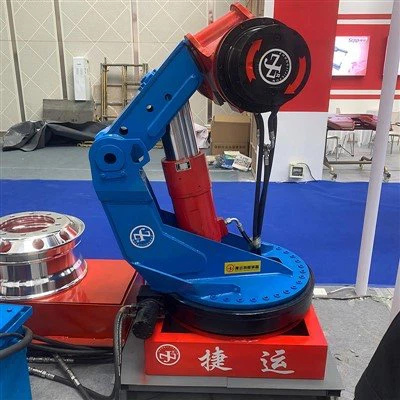
Hydraulic Drive Axle
Our trailer hydraulic drive axle is designed to redefine efficiency and reliability in heavy-duty transportation. This
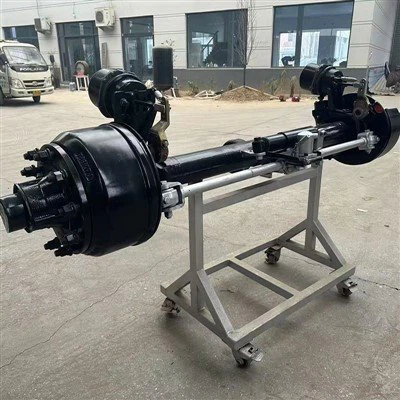
Mechanical Drive Axle
The trailer mechanical drive axle is a critical component engineered to deliver reliable power transmission and

Drive Shaft Drive Axle
The drive shaft drive axle is a critical power transmission component engineered to deliver reliable torque transfer

Tractor Drive Axle
The tractor drive axle, as a core power transmission component of heavy-duty transport vehicles, is a crucial hub