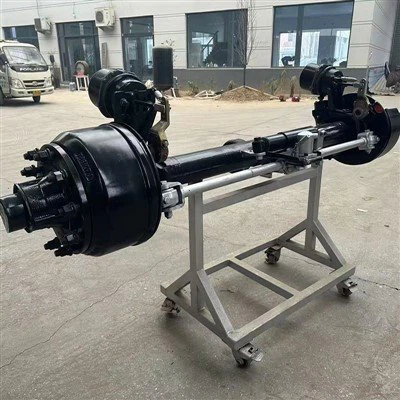
The suspension is the assembly of all force-transmitting connections between the vehicle frame and the axle or wheels, and it is one of the core components determining a vehicle's comfort, stability, and safety. Through the coordinated work of elastic elements, shock absorbers, and guiding mechanisms, it transmits forces and torques between the wheels and the frame, while also cushioning impacts from uneven road surfaces and damping body vibrations, resulting in a smoother driving experience. Structurally, suspensions are mainly divided into two categories: independent and non-independent. Independent suspensions, such as MacPherson struts and multi-link suspensions, improve handling and comfort with their independent wheel movement. Non-independent suspensions, with their simple solid axle structure, offer advantages in cost-effectiveness and high strength in vehicles such as trucks and buses. Whether it's the smoothness of daily commuting or the stability of aggressive driving, the performance of the suspension system is closely related, making it a crucial consideration when choosing a vehicle.
From a specific structural perspective, the sub-types of independent suspensions each have their own emphasis. MacPherson strut suspension, with its compact design integrating coil springs and shock absorbers, and replacing the traditional upper control arm with a lower control arm, saves engine compartment space while ensuring steering precision through rational geometry design. Therefore, it is widely used in the front suspension systems of family cars. Multi-link suspension connects the wheels to the body through three or more links, allowing for precise control of wheel alignment parameters during steering, acceleration, or braking, reducing abnormal tire wear, and balancing straight-line stability with cornering support. It is often found in mid-to-high-end sedans and SUVs. Double wishbone suspension, with its upper and lower control arm design, effectively suppresses body roll and brake dive. It is more common in sports sedans and sports cars, and some models further optimize wheel contact by adjusting the control arm length.