

Walking‑beam suspension, also known as balanced suspension, is a heavy‑duty mechanical running‑gear assembly widely fitted to multi‑axle semi‑trailers and low‑bed heavy‑haul trailers. It solves the load‑distribution challenge for vehicles travelling over uneven road surfaces by leveraging a lever‑style balance beam, which distributes axle load dynamically rather than delivering superior shock‑absorbing performance.
Core Structure
A complete walking‑beam suspension assembly mainly consists of balance beams, central hinge pins, wear‑resistant bushings, frame support brackets, multi‑leaf springs, U‑bolt fasteners and connection pins.
The balance beam is the core load‑bearing rocker. It is pivot‑mounted on the frame bracket at its middle position, with both ends connected to leaf springs, which sit on top of trailer axles. The central hinge pin and bushing serve as the rotating fulcrum, allowing the beam to swing freely up and down within a certain range. Fasteners including U‑bolts lock leaf springs firmly onto axle housings.
Working Principle
The whole set forms a typical lever mechanism with the middle pivot as the fulcrum.
When the trailer drives across potholes, bumps or undulating terrain, one axle will rise or fall following road conditions. Driven by road force, the balance beam swings around its central hinge point. Part of the load from the lifted axle is transferred to the adjacent axle through lever motion.
This dynamic swing keeps relatively even weight sharing among multiple axles. It prevents one single axle from undertaking excessive instantaneous load, reducing risks of axle bending, hub damage and uneven tire wear.
Important note: Walking‑beam suspension can equalize inter‑axle load, but cannot exceed the rated load capacity of each individual axle.
Main Application Scenarios
Heavy‑haul low‑bed trailers: For transporting construction machinery, large‑size equipment and over‑dimension cargo.
Mining & quarry transport: Off‑road vehicles working on rough, unpaved mine and quarry roads.
Construction‑site logistics: Multi‑axle trailers for material delivery on complex site roads.
Agricultural multi‑axle trailers: Farm trailers operating on rugged rural road conditions.
Key Advantages
‑ Realizes automatic load equalization for multi‑axle groups under bad road conditions
‑ Reduces overload‑caused damage to axles, tires and trailer frames
‑ Mature mechanical structure, convenient field inspection and maintenance
‑ Lower comprehensive cost compared with air suspension systems
Drawbacks
Limited shock‑absorbing capacity. It focuses on load balancing instead of damping effect. It is not ideal for high‑speed transportation of fragile or precision cargo, where air suspension performs much better.
Understanding Walking Beam Suspension: Structure, Principle and Application Scenarios
Popular Products

Stacked Suspension
This stacked suspension belongs to the mechanical suspension category. Compared with air suspension and hydraulic

German-style Air Suspension
Representing the pinnacle of European trailer engineering, our German-style air suspension system is engineered for
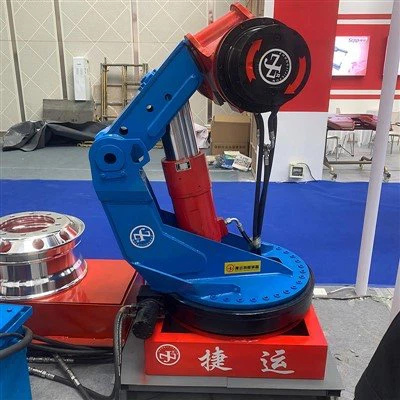
Hydraulic Drive Axle
Our trailer hydraulic drive axle is designed to redefine efficiency and reliability in heavy-duty transportation. This
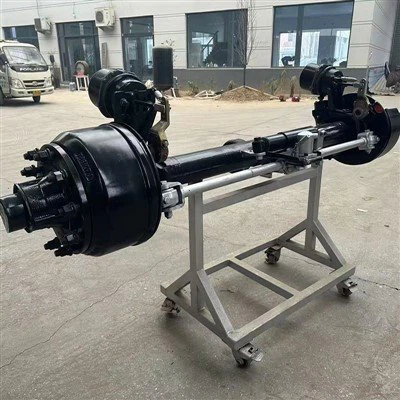
Mechanical Drive Axle
The trailer mechanical drive axle is a critical component engineered to deliver reliable power transmission and

Drive Shaft Drive Axle
The drive shaft drive axle is a critical power transmission component engineered to deliver reliable torque transfer

Tractor Drive Axle
The tractor drive axle, as a core power transmission component of heavy-duty transport vehicles, is a crucial hub