

The overall load-bearing performance of a trailer chassis largely relies on the quality and cooperative performance of its mechanical suspension system. As one of the most fundamental and critical components of trailer running gear, mechanical suspension has undergone decades of technological iteration and structural optimization. Evolving from primitive cushioning devices to mature heavy‑duty chassis solutions for mining transport, long‑haul logistics, and bulk cargo haulage, every technical upgrade of leaf spring mechanical suspension has effectively improved trailer load capacity, driving stability and overall service life, further driving the progress of the global road transportation industry.
In the early stage of trailer development, no standardized suspension structure was available. Early trailers only adopted simple wooden or rubber buffer structures for basic vibration reduction. Without professional spring damping systems, road shocks and vibrations were directly transferred to the trailer axle and frame. Under bumpy and unpaved working conditions, concentrated mechanical stress easily caused axle fatigue cracks, frame deformation and abnormal tire wear. Early trailers could merely satisfy basic cargo transportation demands, with obvious weaknesses in durability, driving safety and operational stability.
The invention and application of leaf‑spring mechanical suspension completely revolutionized traditional trailer chassis design. The multi‑layer leaf spring structure absorbs road impact through elastic deformation, delivering stable and reliable damping performance with a simple and mature mechanical principle. Nevertheless, the first‑generation mechanical suspensions were restricted by backward metallurgy and manufacturing techniques. Unstable steel purity, insufficient toughness and incomplete heat treatment frequently led to spring deformation, fatigue failure and fracture. In addition, suspension brackets, hangers, U‑bolts and other accessories lacked unified precision standards. Most trailer manufacturers adopted scattered component procurement, resulting in mismatched stress points, unbalanced force distribution and frequent chassis failures.
With the continuous upgrading of forging, machining and heat treatment technologies, mechanical suspension entered a key optimization period. Modern high‑strength spring steel greatly improves tensile performance, toughness and fatigue resistance through standardized quenching and tempering processes. Traditional multi‑piece thick leaf springs have been gradually upgraded to variable‑section lightweight leaf springs, realizing effective chassis weight reduction while maintaining reliable heavy‑load capacity. At the same time, the overall manufacturing precision of suspension accessories has been greatly improved. Unified tolerance standards and optimized structural design significantly reduce local stress concentration, effectively solving common problems such as tire eccentric wear, spring fatigue and structural fracture.
In recent years, the most revolutionary industry upgrade lies in the integrated matching design of axle and mechanical suspension. In the past, separate production and independent assembly caused inconsistent stress feedback between axles and suspensions. Long‑term heavy‑duty operation led to uneven force bearing and accelerated axle fatigue damage. With the wide application of integrated axle‑suspension assembly solutions, suspensions, axles and connecting structures are developed as a complete system with unified design standards and mechanical parameters. Road impact is evenly dispersed through the suspension system, effectively protecting the axle tube and frame, and greatly improving the overall structural stability and durability of heavy‑duty trailer chassis.
Until today, mechanical suspension still holds an irreplaceable core position in the global trailer industry. Benefiting from its simple structure, strong universality, convenient maintenance and low overall operating cost, mechanical suspension is widely applied in heavy mining transport, rural unpaved roads and various harsh working conditions popular in South America, Africa, Southeast Asia and domestic heavy‑haul logistics markets.
Although air suspension has gradually become mainstream in high‑end and standardized logistics scenarios, mechanical suspension retains unique advantages in impact resistance, overload resistance and harsh environment adaptability. Modern manufacturers continuously compensate for the inherent limitations of traditional mechanical suspension by optimizing spring arc structure, upgrading bushing materials and improving assembly precision, achieving better damping performance and longer service cycles.
The technological evolution of mechanical suspension marks the continuous progress of modern heavy‑duty vehicle engineering. From simple buffer accessories to mature integrated heavy‑duty chassis systems, mechanical suspension technology has laid a solid foundation for the safety, reliability and high efficiency of modern road freight transportation, and continues to provide stable, cost‑effective chassis solutions for the global trailer and logistics industry.
Reference: Industry research from CAAM (China Association of Automobile Manufacturers) and China Federation of Logistics & Purchasing
From Simple Damping to Heavy-Duty Chassis: Mechanical Suspension Technology Evolution
Popular Products

Stacked Suspension
This stacked suspension belongs to the mechanical suspension category. Compared with air suspension and hydraulic

German-style Air Suspension
Representing the pinnacle of European trailer engineering, our German-style air suspension system is engineered for
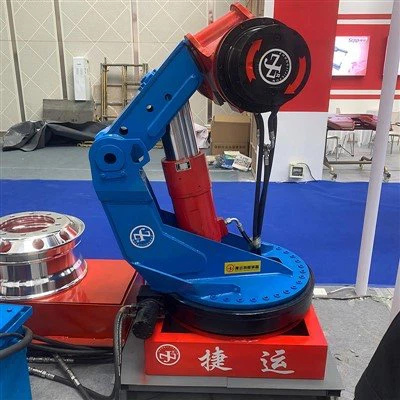
Hydraulic Drive Axle
Our trailer hydraulic drive axle is designed to redefine efficiency and reliability in heavy-duty transportation. This
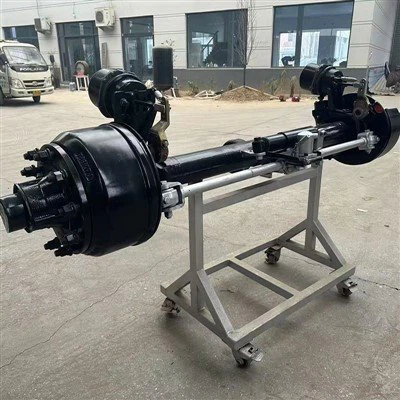
Mechanical Drive Axle
The trailer mechanical drive axle is a critical component engineered to deliver reliable power transmission and

Drive Shaft Drive Axle
The drive shaft drive axle is a critical power transmission component engineered to deliver reliable torque transfer

Tractor Drive Axle
The tractor drive axle, as a core power transmission component of heavy-duty transport vehicles, is a crucial hub