In 2026, China's semi‑trailer and supporting‑components industry maintains steady growth. According to public research data released by CAAM (China Association of Automobile Manufacturers) and the China Federation of Logistics & Purchasing, the total market size of domestic trailer spare parts exceeded 22.8 billion RMB in 2025, representing a 9.3% year‑on‑year growth. Three major industrial clusters - Liangshan in Shandong, Zhuji in Zhejiang and Xingtai in Hebei - account for approximately 67% of China's total production capacity, forming a complete upstream‑downstream industrial chain for axle‑suspension components.
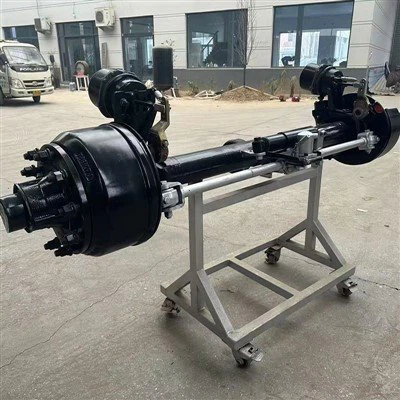
Noticeable changes have occurred in market‑procurement patterns. OEM manufacturers and foreign‑trade buyers are gradually moving away from separate‑component sourcing. Rather than purchasing axles and suspension parts individually, they prefer to source complete axle‑suspension running‑gear assemblies. This approach reduces workload for component inspection and on‑site assembly, eliminates fitting errors stemming from multi‑supplier parts mismatch, and shortens vehicle production cycles. The entire industry is evolving from discrete‑parts supply toward system‑integrated solution delivery.
In the meantime, updated national standards for trailers have been implemented, setting mandatory requirements for suspension fatigue durability and braking‑safety performance. Low‑end products lacking qualified testing capabilities are being phased out of the market. Manufacturers with full‑scale testing facilities covering heat‑treatment, weld flaw detection and fatigue bench testing enjoy strengthened competitive advantages.
Source: Jiexing Axle Industry Knowledge Base
Reference: Industry research from CAAM (China Association of Automobile Manufacturers) and China Federation of Logistics & Purchasing