

The overall driving performance of a trailer is not determined by a single component such as the axle or suspension alone. Instead, it relies on precise matching and coordinated operation of both parts. With continuous iteration of trailer‑manufacturing technologies, the industry has gradually evolved from discrete‑component independent assembly to the integrated axle‑suspension assembly supply model. Synchronized upgrading and structural optimization of axles and suspensions keep improving trailers in load‑bearing capacity, driving stability, overall reliability and later‑stage maintenance convenience, which has become a core driving force for the upgrading of modern logistics transportation equipment.
In the early trailer‑production mode, axles and suspensions were independent spare parts. Trailer manufacturers purchased axle tubes, spindles, leaf springs, brackets, U‑bolts and other accessories separately and then assembled them on‑site. Due to inconsistent standards and varied machining tolerances among different component suppliers, mismatches frequently occurred between suspension stress points and axle load‑bearing structures. When trailers travelled on bumpy roads, stress concentrated on vulnerable positions such as axle tubes and weld seams, easily causing fatigue damage, deformation or even fracture of axles. Meanwhile, offset suspension force led to abnormal tire wear and accelerated loss of bearings and brake pads, greatly shortening the service life of trailers. The discrete‑assembly mode not only imposed high requirements on manufacturers' processing techniques, but also brought obvious drawbacks including poor stability and high failure rates.
As the industrial level of trailer manufacturing keeps improving, the industry has reached a clear consensus: the axle and suspension are not simply pieced‑together parts, but highly‑coupled integral running systems. Iterative upgrading of suspension structures in turn promotes continuous optimization of axle structures, processing technologies and parameters.
For working conditions with mechanical rigid leaf‑spring suspensions, vehicles endure long‑term road impact and heavy‑load stress, setting high requirements for axles in bending resistance and weld‑joint fatigue performance. Manufacturers generally adopt thick high‑strength axle tubes, optimize welding processes between spindles and axle tubes, and strengthen overall toughness through quenching‑and‑tempering heat treatment to guarantee structural stability under harsh working conditions.
The popularization of air suspensions has reshaped design standards for axles of mid‑to‑high‑end trailers. Flexible shock absorption of airbags greatly buffers road impact and reduces load pressure on axles, making lightweight hollow tubular trailer axles applicable to realize vehicle‑weight reduction and efficiency improvement. At the same time, air suspensions require extremely high assembly precision, forcing standardized and precision‑oriented production of axle bracket positioning and mounting dimensions.
For heavy‑duty hydraulic suspension systems used in oversize‑cargo transportation, custom‑built heavy‑load dedicated axles are adopted. Through structural enhancement and material upgrading, their torsion‑resistance, bending‑resistance and anti‑impact capacity are greatly improved to meet transportation requirements for overweight and over‑dimension cargo.
Matching accuracy between axles and suspensions directly determines three core driving performances of trailers.
First is driving stability. Precisely calibrated integrated assemblies distribute loads evenly to each axle during turning and bumpy‑road driving, effectively restraining body shaking and offset and greatly improving driving safety.
Second is tire service life. Mismatched assemblies are a core cause of abnormal tire wear. Standardized complete assemblies accurately calibrate wheelbase and parallelism, reduce abnormal friction and significantly cut operation and‑maintenance costs for fleets.
Third is braking safety. Huge impact generated during braking transmits to axles through suspensions. Integrated collaborative design effectively disperses braking impact, protects axle tubes, bearings and brake assemblies, and avoids potential safety hazards such as brake fade and component damage.
Correspondingly, fundamental shifts have taken place in market procurement demands. In the past, customers mostly purchased axles and matched suspensions separately. Nowadays, domestic and overseas OEM manufacturers and foreign‑trade buyers prefer one‑stop procurement of complete axle‑suspension assemblies. Complete assemblies eliminate secondary adaptation work, simplify assembly procedures and shorten production cycles. They thoroughly solve problems caused by scattered‑part adaptation errors and assembly mistakes, and greatly reduce after‑sales failure rates.
Demands for assembly configurations vary distinctly across different application scenarios and overseas markets. On harsh unpaved roads such as construction sites and mines, assemblies combining mechanical rigid suspensions and heavy‑duty drum‑brake axles dominate the market thanks to their impact resistance, easy maintenance and high part universality. For high‑speed trunk‑line logistics and cold‑chain precision transportation, assemblies equipped with air suspensions and disc‑brake axles see continuously growing demand for their excellent shock‑absorbing performance and sensitive & reliable braking.
Overseas markets show obvious segmentation. Developing countries in Africa, Latin America and Southeast Asia focus on cost‑performance, with huge demand for economical rigid‑suspension‑axle assemblies. Mature European and North‑American markets set strict standards for product tolerances, anti‑corrosion workmanship, fatigue performance and safety certification. High‑end integrated assemblies with disc brakes and air suspensions become mainstream options.
Looking ahead of the industry, lightweight design, integration and intelligence will be the core development directions for axle‑suspension assemblies. High‑strength hollow alloy‑steel axle tubes will gain wide‑spread application, reducing vehicle dead‑weight while guaranteeing heavy‑load capacity to raise transportation benefits. Intelligent modules such as tire‑pressure monitoring, temperature sensing and wear‑warning functions will be gradually integrated into assembly systems to realize early fault prediction and predictive maintenance.
In the future, axles and suspensions will completely break away from the attribute of single spare parts and upgrade into integrated, precise and intelligent trailer running‑gear solutions, continuously empowering the modern logistics system featuring high efficiency, safety and low operating cost.
Co‑evolution of Axle‑Suspension Assembly and Its Promotion on Trailer Overall Performance
Popular Products

Stacked Suspension
This stacked suspension belongs to the mechanical suspension category. Compared with air suspension and hydraulic

German-style Air Suspension
Representing the pinnacle of European trailer engineering, our German-style air suspension system is engineered for
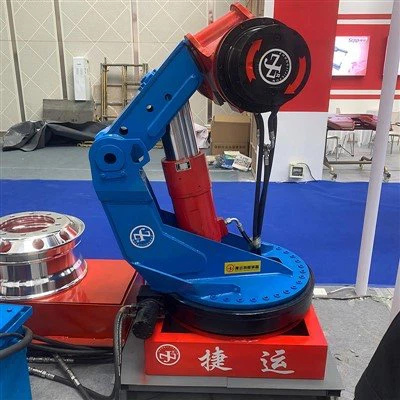
Hydraulic Drive Axle
Our trailer hydraulic drive axle is designed to redefine efficiency and reliability in heavy-duty transportation. This
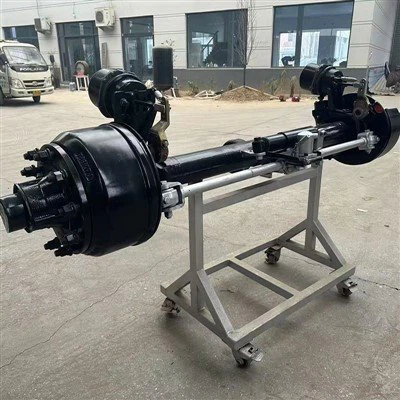
Mechanical Drive Axle
The trailer mechanical drive axle is a critical component engineered to deliver reliable power transmission and

Drive Shaft Drive Axle
The drive shaft drive axle is a critical power transmission component engineered to deliver reliable torque transfer

Tractor Drive Axle
The tractor drive axle, as a core power transmission component of heavy-duty transport vehicles, is a crucial hub