How does a rigid suspension perform on snowy roads?
As a dedicated supplier of rigid suspensions, I've witnessed firsthand the diverse performance of our products across various terrains. Snowy roads present a unique set of challenges and opportunities for vehicles, and understanding how a rigid suspension behaves in these conditions is crucial for both drivers and vehicle manufacturers.
The Basics of Rigid Suspension
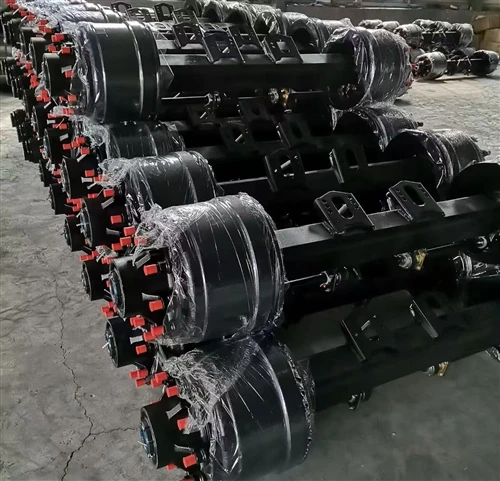
Before delving into its performance on snowy roads, let's briefly understand what a rigid suspension is. A rigid suspension is a type of vehicle suspension system where the wheels on the same axle are connected by a solid beam or axle. This design offers several advantages, including simplicity, durability, and the ability to handle heavy loads. There are different types of rigid suspensions available in the market, such as Stamped Rigid Suspension, Trailer Rigid Suspension, Steel Plate Suspension, Semi - rigid Suspension, and Rear Leaf Spring Suspension.
Advantages of Rigid Suspension on Snowy Roads
One of the primary advantages of a rigid suspension on snowy roads is its stability. The solid axle design helps to keep the wheels in alignment, providing better traction and control. When driving on snow, the weight of the vehicle is distributed more evenly across the wheels, which can prevent the wheels from slipping. This is especially important when accelerating, braking, or turning on slippery surfaces.
Another benefit is the ability to handle rough terrain. Snowy roads often have uneven surfaces, including snow drifts, ice patches, and potholes. A rigid suspension can absorb the shocks and vibrations caused by these obstacles, providing a smoother ride for the driver and passengers. The durability of the rigid suspension also means that it can withstand the harsh conditions of winter driving without suffering significant damage.
Challenges of Rigid Suspension on Snowy Roads
However, rigid suspensions also face some challenges on snowy roads. One of the main issues is the lack of independent wheel movement. Since the wheels on the same axle are connected by a solid beam, if one wheel hits a bump or a patch of ice, the other wheel will also be affected. This can lead to a loss of traction and control, especially in situations where the road surface is uneven.
Another challenge is the increased risk of skidding. The rigid suspension design can make the vehicle more prone to skidding on slippery surfaces, as the wheels are less able to adapt to changes in the road conditions. This can be particularly dangerous when driving at high speeds or when making sudden maneuvers.
Factors Affecting Rigid Suspension Performance on Snowy Roads
Several factors can affect the performance of a rigid suspension on snowy roads. The type of tires used is one of the most important factors. Winter tires are designed to provide better traction on snow and ice, and they can significantly improve the performance of a rigid suspension. The tread pattern, rubber compound, and tire size all play a role in determining the tire's grip on the road.
The weight distribution of the vehicle also affects the performance of the rigid suspension. A vehicle with a more even weight distribution will have better traction and control on snowy roads. This can be achieved by properly loading the vehicle and ensuring that the weight is evenly distributed across the axles.
The condition of the suspension system itself is also crucial. A well - maintained rigid suspension will perform better on snowy roads than a worn - out or damaged one. Regular inspections and maintenance, such as checking the springs, shock absorbers, and bushings, can help to ensure that the suspension system is in good working condition.
Tips for Driving with Rigid Suspension on Snowy Roads
If you're driving a vehicle with a rigid suspension on snowy roads, there are several tips that can help you stay safe. First, reduce your speed. Snowy roads require slower speeds to maintain control and avoid skidding. Second, increase your following distance. This will give you more time to react if the vehicle in front of you stops suddenly.
Third, use gentle acceleration and braking. Sudden acceleration or braking can cause the wheels to lose traction and skid. Instead, apply the accelerator and brakes gradually to maintain control of the vehicle. Fourth, avoid sudden turns. When turning on a snowy road, make sure to turn the steering wheel slowly and smoothly to prevent the vehicle from skidding.


Our Rigid Suspension Solutions
At our company, we offer a wide range of rigid suspension products that are designed to perform well on snowy roads. Our Stamped Rigid Suspension is made from high - quality materials and features a stamped design that provides excellent strength and durability. The Trailer Rigid Suspension is specifically designed for trailers, offering reliable performance and stability in all weather conditions.
The Steel Plate Suspension is known for its robustness and ability to handle heavy loads. Our Semi - rigid Suspension provides a balance between the stability of a rigid suspension and the flexibility of an independent suspension, making it suitable for a variety of applications. And the Rear Leaf Spring Suspension offers a classic and reliable solution for rear - wheel drive vehicles.
Contact Us for Rigid Suspension Procurement
If you're in the market for a high - quality rigid suspension for your vehicle, we invite you to contact us for procurement and further discussions. Our team of experts is ready to assist you in choosing the right suspension system for your specific needs and requirements. Whether you're a vehicle manufacturer, a fleet operator, or an individual driver, we can provide you with the best solutions for your winter driving needs.
References
- Gillespie, T. D. (1992). Fundamentals of Vehicle Dynamics. Society of Automotive Engineers.
- Milliken, W. F., & Milliken, D. L. (1995). Race Car Vehicle Dynamics. Society of Automotive Engineers.
- Wong, J. Y. (2001). Theory of Ground Vehicles. John Wiley & Sons.